
We are a small business. Do we need a social media strategy? The number of times I have been asked this question at an event or a conference. And my response is always ‘Yes definitely! Social media marketing is a necessity for a business to succeed online and not an option anymore.”
Here are the 6 key stages I use when creating a social media strategy:
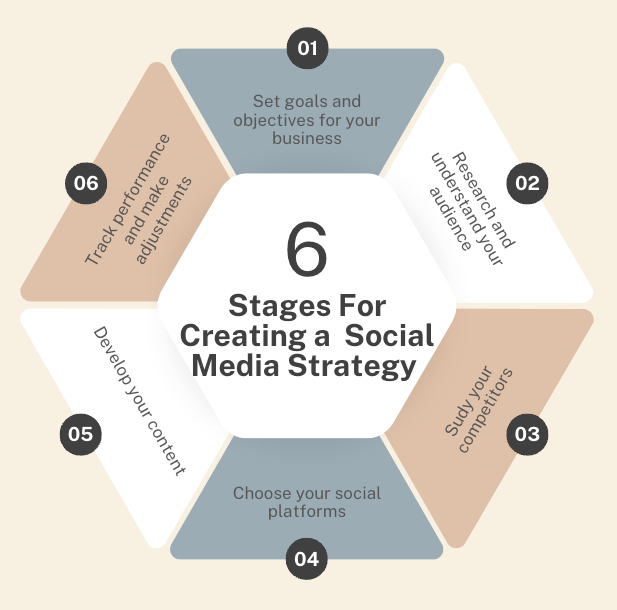
✅ Set goals and align with your business’s digital marketing strategy.
Establish clear objectives and goals. Determining your social media goals will determine the rest of your strategy. Think about what your business wants to achieve from social media. Is it brand awareness or perhaps generate more leads? Once you establish your goals, set metrics for each channel you plan to use.
✅ Research and understand your audience
It is very important to have a strong understanding of your target audience: their wants and needs so you know how to target and engage them on social media. Understanding what platforms they use, what type of content they prefer, who else do they follow will allow you to target your audience better. To develop content that attracts and inspires your target audience, you need to find out what resonates with them.
✅ Study your competitors – Conduct a competitive analysis
A competitor analysis will give you insight on what your competitors are doing on social media and help you spot opportunities and weaknesses giving you ideas for your own social strategy.
✅ Decide which social platforms to use
Prioritise social platforms that will have the most impact on your business and make sure your marketing team has the resources to handle content for those networks. The right platforms for your business will depend on factors including your target audience, industry and goals. A business can choose multiple social media platforms as long as the content posted is unique and relevant content on all of them.
✅ Develop your content
Once the social media platforms have been decided, the next step is creating the content strategy. Also, developing a content calendar and having a plan in place for when the content is shared to get maximum impact is important.
✅ Track performance and make adjustments
As you start to implement your plan and track your results, you may find that some strategies don’t work as well as you would have expected while others work even better. Revisit on a regular basis and make sure your content and engagement are meeting business goals. If not, tweak the original strategy. Look at performance metrics, benchmark your results and re-evaluate, test and do it all again.
 Innovate Digital Solutions